

As part of the world’s push toward sustainable energy, an offshore wind farm is playing a vital role in strengthening green infrastructure. Maintaining turbine reliability depends on regular underwater inspections, where expertise and technology are necessary to streamline operations and safeguard assets.
Offshore wind farms depend on robust foundations to anchor turbines and withstand harsh marine and weather conditions. This particular wind farm used steel jacket foundations, four-legged structures continuously exposed to seawater. Over time, such exposure can lead to surface corrosion and marine growth (barnacles, algae), compromising structural integrity. To ensure long-term safety and reliability, asset owners needed to perform regular underwater inspections.
Following industry standards, the wind farm conducted underwater inspections of their wind turbines on an annual basis. However, they found their conventional method too costly. Their operations usually required:
Apart from this, the process was highly dependent on very experienced pilots and supervisors with at least 5 years of experience.
Unpredictable weather also created turbulent waters and a challenging environment for vehicles to operate in, limiting the daily inspection window. Hence, the client sought an alternative solution that could streamline underwater inspections, control costs, and deliver optimal results.
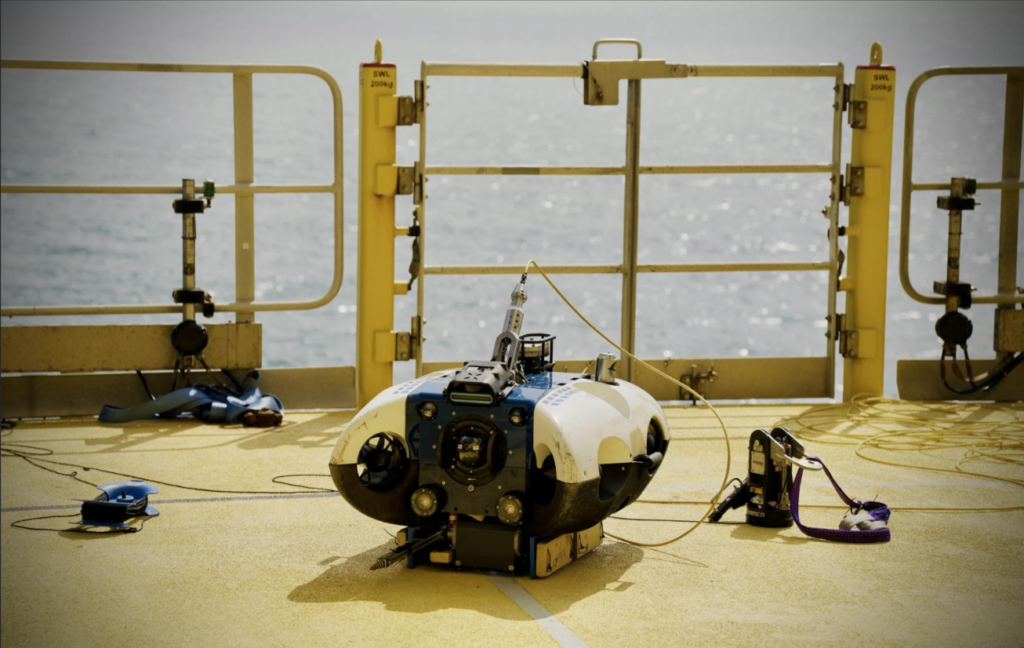
Where traditional methods required large vessels and steeper costs, BeeX stepped in with a cost-effective alternative. The company deployed A.IKANBILIS, its flagship Hovering Autonomous Underwater Vehicle (HAUV) designed for inspection tasks comparable to other working-class ROVs, but at a fraction of the cost.
The project quickly moved into action. Measuring under one meter in length and weighing less than an adult human, A.IKANBILIS was transported to the turbine using the same Crew Transfer Vessels (CTVs) that carried above-water maintenance technicians. From there, it was moved onto the transition platform and deployed directly from the structure using a davit crane. This approach reduced operational costs and minimized the risk of vessel-to-structure impacts typically associated with ROV deployments from DP2 vessels.
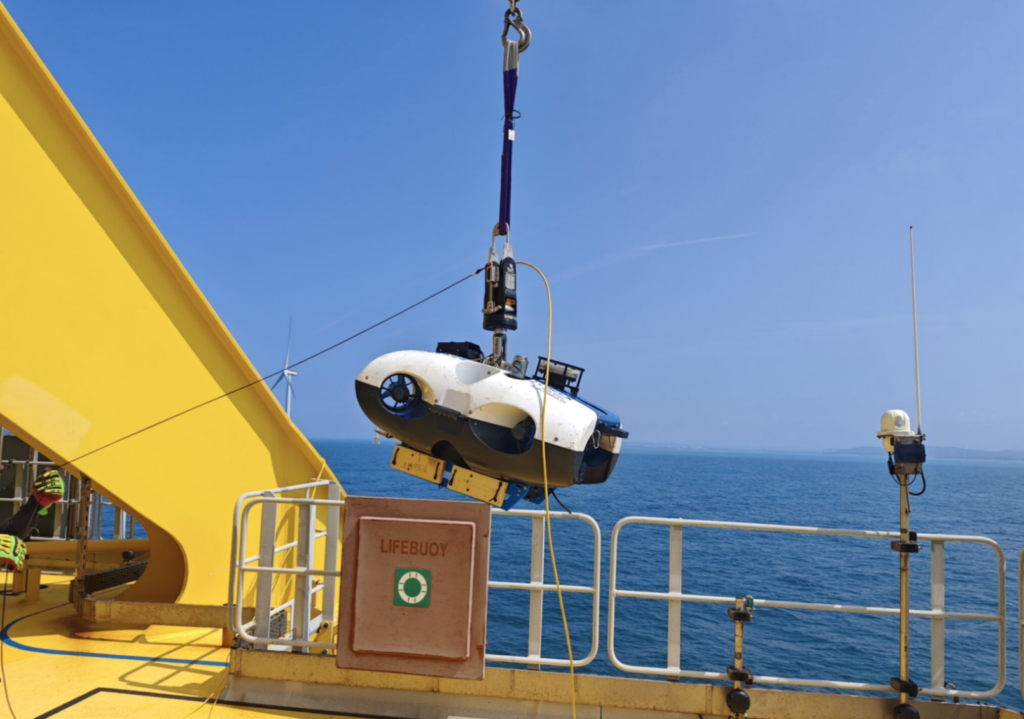
These deployments marked a shift in operational paradigms. It was once assumed that small vehicles lacked the productivity of larger systems and relied heavily on remote pilots for control. However, A.IKANBILIS, with unpiloted control, carried out inspections with productivity comparable to traditional ROVs.
By combining the HAUV’s advanced AI detection capabilities with the dynamic positioning precision of a DP2 vessel, the HAUV efficiently conducted General Visual Inspections (GVI) to detect surface damage and Close Visual Inspections (CVI) to identify other anomalous objects. Due to its onboard autonomy, flight paths were optimized, completing inspections in 50% less time. As a result, on-site technicians shifted their role from pilots to focused inspectors.
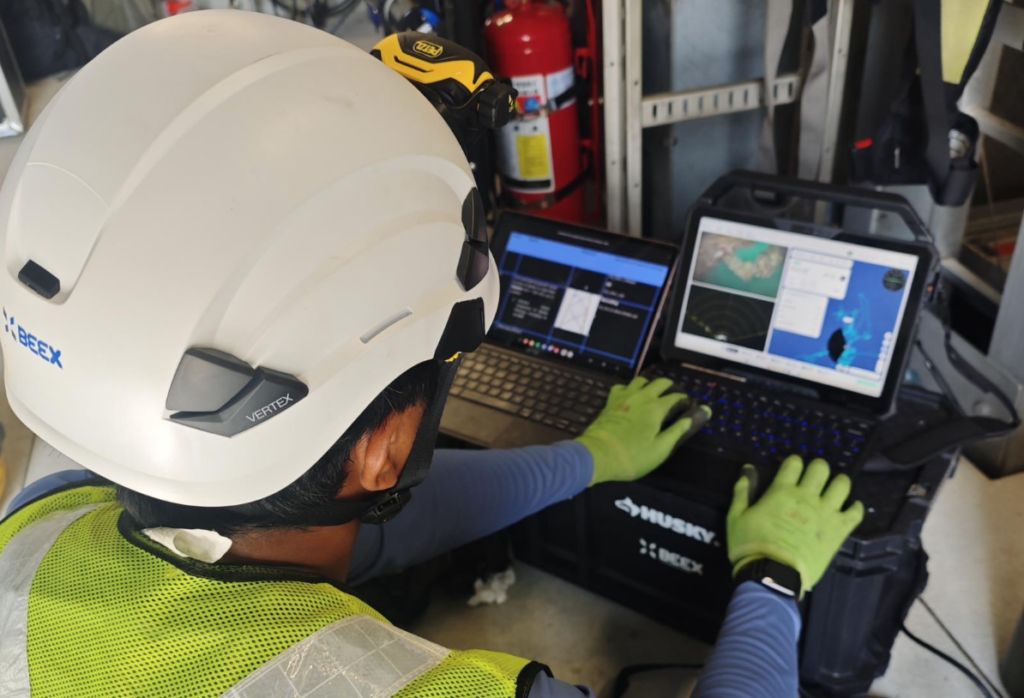
Simultaneously, a Cathodic Protection (CP) probe was used to measure corrosion at predetermined locations of the structure, while another specialized sensors measured the thickness of marine growth. Beyond the jacket structure itself, A.IKANBILIS mapped the surrounding seabed using an acoustic sonar, creating detailed 2D and 3D sonar image mosaics that helped identify areas of erosion and debris.
The breakthrough was not just in capability, but it was also in delivery. In real-time, A.IKANBILIS’ georeferenced mission data was reported on the Sambal Portal, BeeX’s proprietary Data Analysis System. Asset owners could review visual snapshots of underwater conditions, investigate flagged anomalies, and other reports that enable immediate decision-making and action.
Notable progress continues each month as A.IKANBILIS advances its work with the client. Impressed by the vehicle’s performance, an Operations & Maintenance Engineer shared, “A.IKANBILIS has proven to be an attractive option for our offshore inspections, especially as we aim to reduce our reliance on larger working-class ROVs. While those ROVs remain essential for heavy-duty maintenance, this HAUV saves us significant time and capital for inspection tasks.”
In its current phase, the project has achieved approximately 50% cost savings, validating the effectiveness of this new inspection approach. With faster access to inspection data, uncertainties about structural health were promptly addressed. This case study stands as a strong example of cost-effective, actionable intelligence, delivering results when it matters most.